
GST on Corporate Gifts in India: Rates, Input Tax Credit and the ₹50,000 Rule
When you buy corporate gifts, you pay GST at the rate that applies to each product (most gift items attract 18%, some 5%). Input tax credit on goods given away as gifts is generally not available under Section 17(5)(h) of the CGST Act. Gifts from an employer to an employee worth up to ₹50,000 per employee per financial year are not treated as a supply under Schedule I.
This guide is general information to help you plan a gifting budget. It is not tax advice. Confirm your treatment with your chartered accountant.
1. Which GST rate applies to a corporate gift?
GST is charged on the product, not on the occasion. A bottle, a notebook or a clock attracts the rate for its HSN code whether you use it yourself or give it away. Since GST rates were rationalised in September 2025, most everyday goods fall in the 5% or 18% slabs.
In our catalogue, most products attract 18% GST and some attract 5%; for example the mini pooja thali set is at 5%. Every product page shows the GST rate and HSN code, and every price on the site is before GST, so you can budget accurately.
2. Can you claim input tax credit on gifts?
Usually not. Section 17(5)(h) of the CGST Act says input tax credit is not available on goods "disposed of by way of gift or free samples". In practice, the GST you pay on gifts for employees, clients or event visitors is a cost to the business, so budget for the GST-inclusive amount.
There are narrow exceptions worth discussing with your CA. For example, where goods are given to dealers under a pre-agreed scheme with conditions (such as a sales-target incentive), some Authority for Advance Ruling decisions have treated them as a supply rather than a gift, with credit allowed. Ordinary festive gifting does not fall in this category.
3. Gifts to employees: the ₹50,000 rule
Schedule I of the CGST Act lists supplies that are taxable even without payment. Its proviso says that gifts not exceeding ₹50,000 in value in a financial year by an employer to an employee are not treated as a supply. For a typical Diwali, joining or work-anniversary gift, the value stays well within this limit.
| Gift to an employee up to ₹50,000 a year | Not treated as a supply; no output GST on the gift |
|---|---|
| Gift to an employee above ₹50,000 a year | May be treated as a supply; take advice |
| Input tax credit on goods bought as gifts | Generally blocked under Section 17(5)(h) |
| Gifts to clients, dealers, event visitors | Credit generally blocked; scheme-based incentives may differ |
Gifts, free samples and promotional items: what's the difference?
Section 17(5)(h) covers goods "disposed of by way of gift or free samples". In everyday corporate gifting, festive gifts, welcome kits, event giveaways and branded merchandise handed out free are usually all treated the same way: the goods leave the business without payment, so credit on them is generally blocked. What changes the position is a genuine condition attached to the goods, such as a pre-agreed incentive scheme. If your gifting is linked to targets or contracts, discuss it with your CA before you place the order.
How to build GST into a gifting budget
- Start from the per-piece price before GST. Our prices are shown this way on every page.
- Add branding and shipping. These are quoted as separate lines.
- Add GST at each product's rate. Use the rate shown on the product page (18% or 5% for most items in our range).
- Treat the total as the cost. Since credit on gifts is generally blocked, the GST-inclusive total is what the gift costs the business.
Common mistakes
- Comparing a GST-inclusive quote from one supplier with a GST-exclusive quote from another.
- Assuming every gift item has the same GST rate: rates follow the HSN code of each product.
- Not sharing the GSTIN before invoicing, which leads to re-issued invoices.
- Booking gift purchases as ordinary inputs and claiming credit on them without checking Section 17(5)(h).
4. What to ask your gifting supplier for
- A proper tax invoice with your GSTIN, the HSN code and the GST rate for each line
- Branding and shipping shown as separate lines
- Prices quoted before GST, so you can compare suppliers like for like
- A validity date on the quote
Our quotes follow this format. You can see each product's GST rate and HSN code before you ask: browse all gifts.
5. A worked example
Suppose you order 100 pieces of a gift at ₹200 per piece. The goods value is ₹20,000; at 18% GST the tax is ₹3,600, making ₹23,600 before branding and shipping. Since credit is generally blocked on gifts, budget for the GST-inclusive total.
Gifts mentioned in this guide

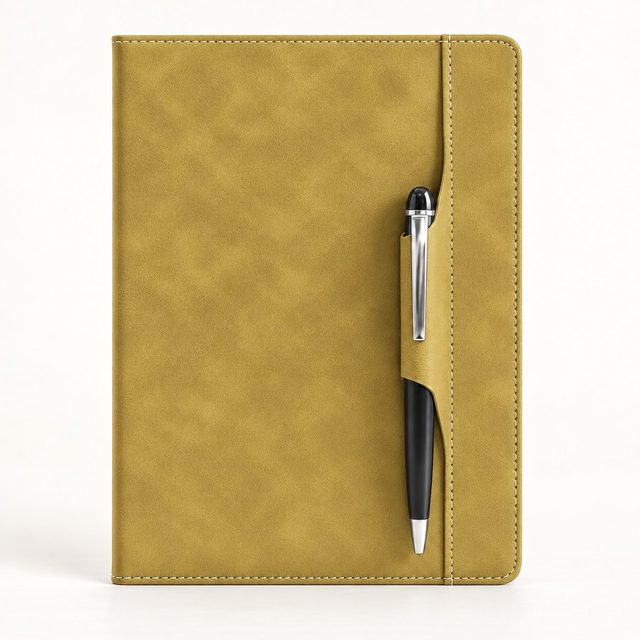
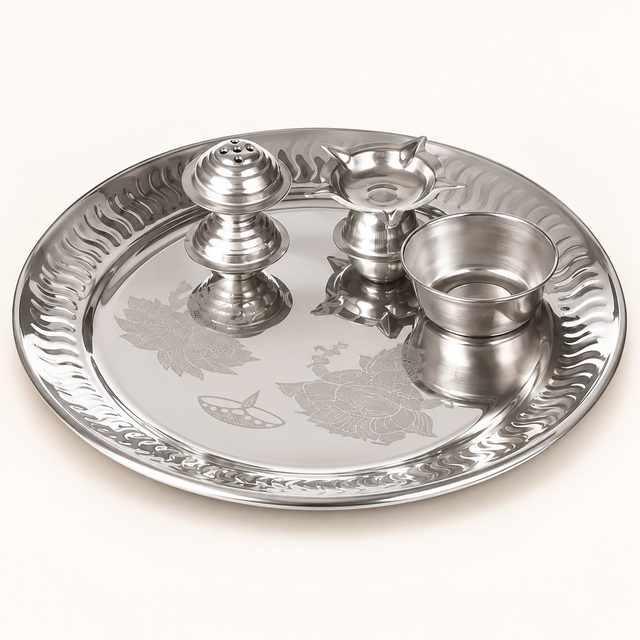
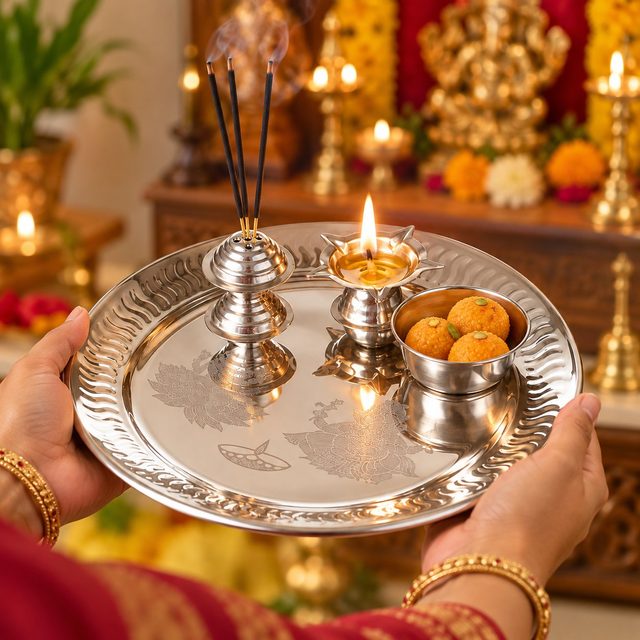




Frequently asked questions
Can a company claim input tax credit on Diwali gifts?
Generally no. Section 17(5)(h) of the CGST Act blocks input tax credit on goods disposed of by way of gift or free samples. Keep this in mind when comparing prices: the GST you pay on gifts is usually a cost.
Do gifts to employees attract GST?
Under Schedule I of the CGST Act, gifts by an employer to an employee of up to ₹50,000 in value in a financial year are not treated as a supply. Above that value, the gift can be treated as a supply and GST may apply.
What GST rate applies to corporate gifts?
It depends on the product and its HSN code, not on the fact that it is a gift. Most items in our catalogue attract 18% GST and some attract 5%. Each product page shows its rate and HSN code.
Will I get a GST invoice?
Yes. Share your company's GSTIN with your enquiry and it will appear on the invoice.
Is branding charged with GST?
Branding is quoted separately and GST is added on the invoice as applicable. Your quote shows each line clearly.
What is an HSN code and why does it matter?
HSN (Harmonised System of Nomenclature) is the classification code for goods. It decides the GST rate. Your invoice should show the HSN code for each product; on our site it is listed on every product page.
Does the ₹50,000 limit apply per gift or per year?
Per employee, per financial year. Under the Schedule I proviso, gifts from an employer to an employee not exceeding ₹50,000 in value in a financial year are not treated as a supply.
Should we budget for GST even if our company is GST-registered?
Yes. Being registered does not by itself make credit available on gifts, because Section 17(5)(h) generally blocks it. Treat the GST on gifts as part of the cost.
Sources
Need help choosing?
Tell us your budget, quantity and date and we'll suggest options.